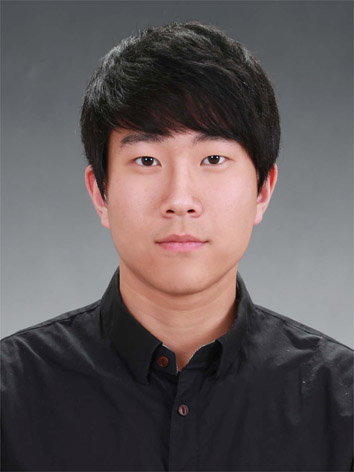
About Me
I am a final-year Ph.D. candidate at the Machine Learning and Intelligence Lab. at Korea Advanced Institute of Science and Technology (KAIST), advised by Prof. Eunho Yang.
Research Focus
My research centers on efficient inference for large-scale foundation models, with a broader interest in efficient training and post-training. I primarily approach efficiency from an algorithmic perspective, but I am especially interested in methods that remain effective under real hardware and system constraints. In other words, I care not only about improving algorithmic metrics, but also about whether those improvements translate into meaningful reductions in latency, memory usage, and computational cost in realistic workloads. This perspective has naturally led me to study the interaction between algorithms and the characteristics of modern accelerators, memory hierarchies, parallel execution, and serving systems.
Current Research Directions
My recent work focuses on several complementary directions toward practical acceleration of large-scale models. One major direction is efficient reinforcement learning for language models, particularly accelerating RLVR rollouts through techniques such as quantized inference and efficient scheduling. I am also continuing to work on speculative decoding, with an emphasis on making it genuinely effective in realistic serving settings such as large-batch, high-throughput, and offline inference, rather than optimizing acceptance-related metrics in isolation. Quantization is another central theme in my research, both as a standalone compression technique and as a building block that can be integrated with other acceleration methods. More broadly, I am interested in understanding how efficiency bottlenecks change across workloads and architectures, and in designing methods that are tailored to those changing bottlenecks rather than assuming a single inference regime.
Broader Vision
Looking forward, I am particularly interested in efficiency challenges arising from new workloads, model architectures, and modalities. This includes agentic and long-horizon inference, multimodal models, sparse and linear attention, mixture-of-experts models, and other architectures whose computational behavior differs substantially from conventional dense autoregressive models. I believe these shifts will create new opportunities for algorithmic acceleration, but will also require a more careful understanding of workload structure, hardware utilization, memory behavior, and system-level constraints. My broader goal is to develop principled and practically effective algorithms that make increasingly capable models faster, more resource-efficient, and more economical to train and deploy. While my current focus is on inference, my earlier work in optimization and memory-efficient learning also provides a broader foundation for studying efficiency across the full lifecycle of modern foundation models.
Publications & Research Works (Last Updated: Oct. 2026)
- Revisiting Speculative Decoding for High-Throughput LLM Inference with Linear Attention, Sparse MoE, and Low Precision
Sihwan Park
Work in Progress (2026)
Recent advances in LLM architectures and deployment, including hybrid linear attention, sparse MoE, and low-precision inference, are reshaping the computational characteristics of high-throughput serving. This project revisits speculative decoding under these evolving conditions, investigating how architectural and precision changes affect its efficiency at large batch sizes. By characterizing the computational costs that speculative decoding amortizes and the additional overheads it introduces, we aim to identify practical optimization opportunities and develop techniques that improve its effectiveness in large-scale LLM serving.
-
KV4-RL: Unlocking Faster Asynchronous Rollouts for RLVR with INT4 KV Cache Quantization
Sihwan Park, Sung-Yub Kim, Doohyuk Jang, Eunho Yang
Preprint (2026) -
Learning Beyond What You Sample: Off-Policy-Aware Cross-Model Trajectory Exchange for RLVR
Doohyuk Jang, Yoonsik Park, Gyouk Chu, Sihwan Park, Eunho Yang
Preprint (2026) -
Bringing Real-World Relations into Video Generation with Graph-Structured Knowledge
Joonhyung Park†, Jaeyun Song†, Sihwan Park, Eunho Yang (†: Equal Contribution)
ACL 2026 -
Elucidating Subspace Perturbation in Zeroth-Order Optimization: Theory and Practice at Scale
Sihwan Park†, Jihun Yun†, Sung-Yub Kim, Souvik Kundu, Eunho Yang (†: Equal Contribution)
Preprint (2025) -
LANTERN++: Enhancing Relaxed Speculative Decoding with Static Tree Drafting for Visual Auto-regressive Models
Sihwan Park†, Doohyuk Jang†, Sung-Yub Kim, Souvik Kundu, Eunho Yang (†: Equal Contribution)
ICLR 2025 Workshop on Scalable Optimization for Efficient and Adaptive Foundation Models
Best Paper Runner-up -
LANTERN: Accelerating Visual Autoregressive Models with Relaxed Speculative Decoding
Doohyuk Jang†, Sihwan Park†, June Yong Yang, Yeonsung Jung, Jihun Yun, Souvik Kundu, Sung-Yub Kim, Eunho Yang (†: Equal Contribution)
ICLR 2025 -
MeZO-A3dam: Memory-efficient Zeroth-order Adam with Adaptivity Adjustments for Fine-tuning LLMs
Sihwan Park†, Jihun Yun†, Sung-Yub Kim, June Yong Yang, Yeonsung Jung, Souvik Kundu, Kyungsu Kim, Eunho Yang (†: Equal Contribution)
Preprint (2024) -
Scale-invariant Bayesian Neural Networks with Connectivity Tangent Kernel
Sung-Yub Kim, Sihwan Park, Kyungsu Kim, Eunho Yang
ICLR 2023 (Spotlight) -
On the Understanding of Sharpness-aware Minimization and its Application: A Perspective on Escape Efficiency and Asymmetric Valley
Sihwan Park
Master’s Thesis, KAIST -
Bias Decay Matters: Improving Large Batch Optimization with Connectivity Sharpness
Sung-Yub Kim, Sihwan Park, Yong-Deok Kim, Eunho Yang
Preprint (2021)
Education
- Ph.D. in Graduate School of AI, KAIST
Sep. 2022 - Present- Advised by Prof. Eunho Yang
- M.S. in Graduate School of AI, KAIST
Sep. 2020 - Aug. 2022- Advised by Prof. Eunho Yang
- B.S. in Computer Science and Mathematical Sciences, KAIST
Mar. 2015 - Aug. 2020
Research Experience
- Research Intern, Computer Architecture and Systems Lab, KAIST, Daejeon, Aug. 2019 - Dec. 2019
- Advisor : Prof. Jaehyuk Huh
- Low-level security techniques of Intel SGX and secure container with KVSSD
- Research Intern, Collaborative Distributed Systems and Networking Lab, KAIST, Daejeon, Jan. 2018 - Oct. 2018
- Advisor : Prof. Dongman Lee
- Signal data processing for IoT task recognition and framework for task segmentation
Selected Research Projects & Collaborations
-
Efficient Foundation Models on Intel Systems
Intel Corporation & NAVER, Sep.2024-Aug.2025 -
A Study on Conversational Large Language Models for Virtual Physicians in Patient Intake
AITRICS, Apr.2024-May.2024 -
A Study on Optimization and Network Interpretation Method for Large-Scale Machine Learning
National Research Foundation of Korea (NRF) grant funded by the Korea government (MSIT), Mar.2023-Feb.2027 -
A Study on Statistically and Computationally Efficient Parameter Structures for Machine Learning Algorithms
NRF grant funded by the Korea government (MSIT), Mar.2021-Dec.2022